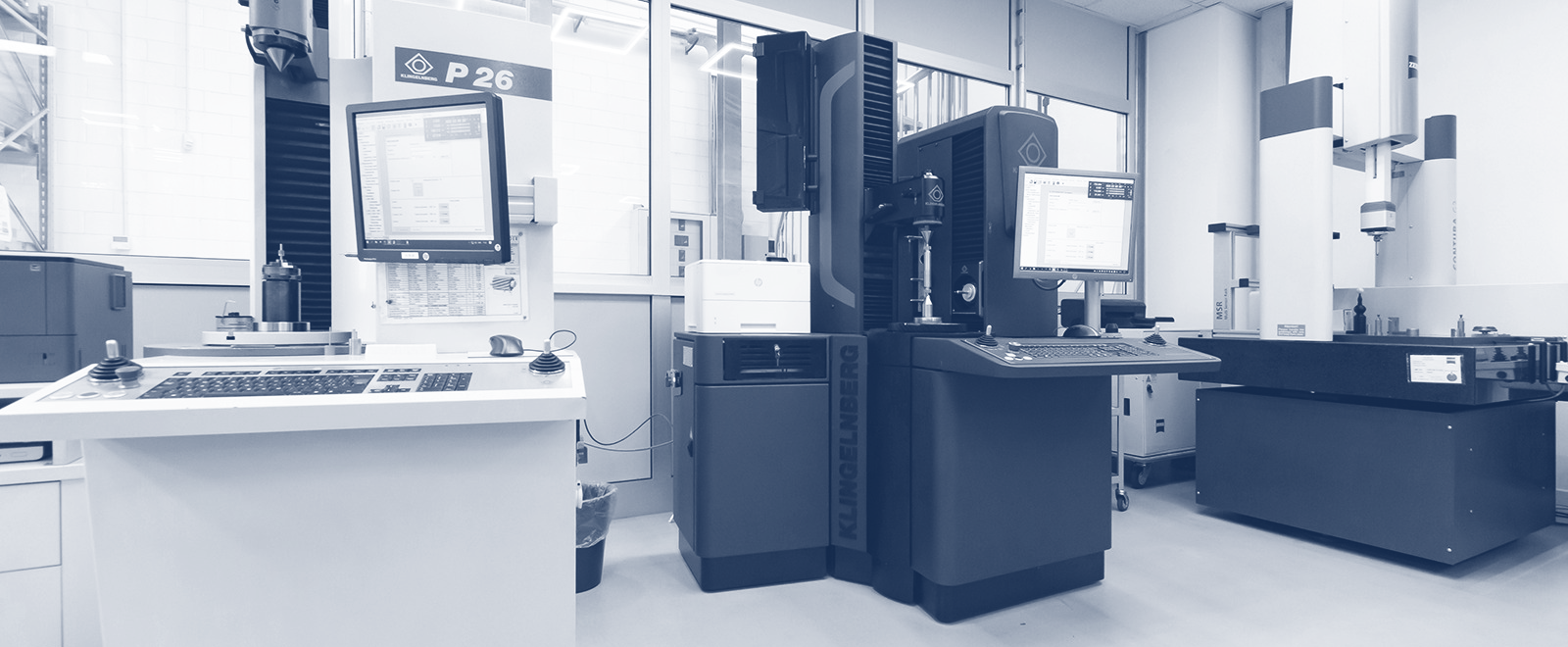
When discussing small precision gearboxes, such as those manufactured by MICROingranaggi, the focus naturally tends to fall on the gears themselves—how they are designed, how they mesh, the materials they are made from, and so on.
However, housing design and lubrication management are just as critical to achieving high performance and long service life.
In many cases, the housing—the structure that encloses and supports all the internal components—is designed primarily around external constraints, such as the available installation space or the dimensions imposed by the equipment into which the gearbox must be integrated, rather than the functional requirements of the gearbox itself.
This approach can lead to a number of problems.
For example, a housing that lacks sufficient stiffness may allow internal misalignment, accelerating gear wear. Likewise, vibrations transmitted through the mounting interfaces can compromise both the stability and the quiet operation of the gearbox. Poorly designed internal cavities may also hinder proper lubricant distribution and heat dissipation.
As a result,
performance issues are often blamed on the gears, when in fact the root cause is an inadequately designed housing.
It is worth remembering that, in miniature gearboxes, even micron-scale deformations can alter gear meshing, increasing noise and reducing service life.
Applications in robotics, medical devices and industrial automation require exceptionally quiet gearboxes. Materials such as aluminium alloys, stainless steel and high-performance engineering polymers can significantly improve vibration damping, but housing design itself also plays a fundamental role. Wall thickness, joint design and surface treatments all have a direct influence on the way vibrations and noise propagate through the assembly.
In aerospace and avionics applications, on the other hand, every component must deliver maximum reliability, durability and precision while operating under extreme conditions of temperature, pressure and acceleration.
Another critical aspect is lubrication, particularly because miniature gearboxes often operate at the high input speeds typical of coreless DC and brushless motors, while simultaneously transmitting relatively high output torque.
This creates several engineering challenges.
The lubricant must maintain excellent thermal stability at high rotational speeds, preventing oil separation, centrifugal displacement and evaporation. At the same time, it must provide sufficient load-carrying capacity to protect the gears during peak torque conditions.
Here again,
housing design can make a substantial difference by incorporating features such as grease reservoirs, internal lubrication channels and specially treated surfaces that improve lubricant distribution and retention.
It should also be remembered that, in miniature gearboxes, every tolerance matters. The housing must ensure precise gear alignment, provide stress-free assembly and allow easy access whenever adjustment or maintenance is required.
In short, the housing is far more than just an enclosure. It has a direct impact on gearbox life, efficiency, noise performance and lubrication quality. A well-engineered housing can make all the difference, particularly in applications involving high rotational speeds and significant loads.