Picture of Stefano Garavaglia

Stefano Garavaglia

È il CEO di MICROingranaggi, nonché l'anima dell'azienda.
Per Stefano un imprenditore deve avere le tre C: Cuore, Cervello, Costanza.
Cuore inteso come passione per quello che fa, istinto e rispetto per il prossimo. Cervello inteso come visione, come capacità a non farsi influenzare da situazioni negative. Costanza perché un imprenditore non deve mai mollare.

Machine Tools: Invest in Speed or Stability? The Right Choice for Gear Manufacturing
If a machine tool is extremely fast but lacks stability, it may turn out to be the wrong investment. Here’s what our experience has taught us.
The Alignment Between Where a Product Is Made, What It Is Worth, and What It Costs Is Becoming Increasingly Important
We are operating in increasingly complex markets, where Asian competition—particularly from China—is now an integral part of the global industrial landscape. The real challenge is not to fear this competition, but to understand how to remain relevant in a rapidly changing world.
Standing Still Means Falling Behind—But So Does Slowing Down
Companies that refuse to change and innovate have already started the countdown. It is only a matter of time. At the same time, making the right decisions at the right moment is equally important. Those who hesitate or make the wrong choices face risks just as great as those who resist change altogether.
Have Machine Tools Reached Their Mechanical Limits?
Today, there seem to be no major mechanical revolutions on the horizon for machine tools. Most innovations now come from CNC systems, software, drives, and motors—in other words, from electronics. And yet, I still believe there is one important challenge left to tackle.
A Positive Thought to Start Again
A little luck certainly never hurts. But luck alone is never enough. It takes consistency, the ability to recognize the right opportunities, and the willingness to take calculated risks. Above all, it requires the determination to never stand still.
Why Choose Small Modules for Quieter Gears?
A carefully engineered gear transmission can be not only strong and efficient, but also remarkably quiet. Gear module selection affects not only the mechanical strength of the system, but also its noise performance.
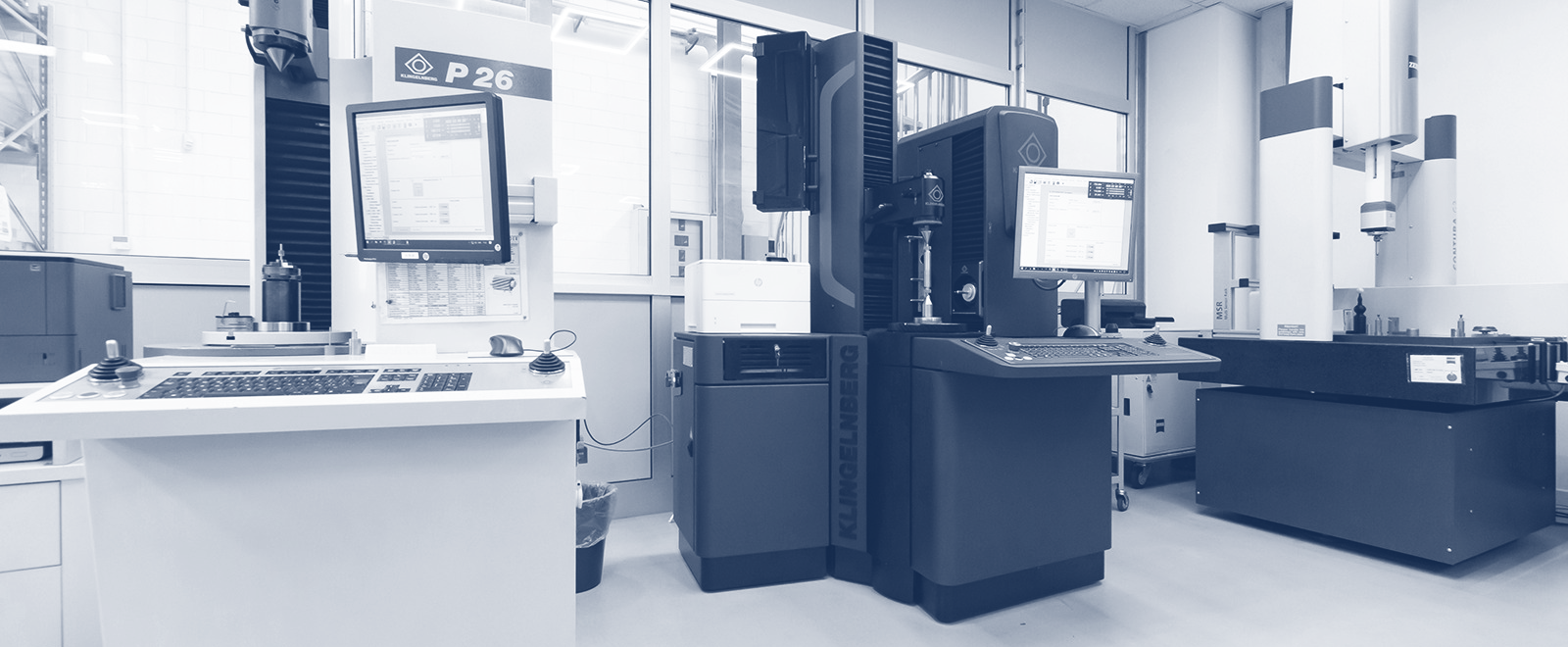
Is It Possible to Manufacture Gears Without a Gear Measuring Center?
The answer is yes. However, without a dedicated gear measuring center, manufacturers cannot know exactly what they have produced, nor can they provide complete documentation, certify gear quality or offer a fully comprehensive service to their customers.
Even in Small Gearboxes, the Housing Is Critical
It directly affects system life, efficiency, noise levels and lubrication performance. A housing is far more than just an enclosure: when properly engineered, it can make a significant difference, especially in applications involving high speeds and demanding loads.
There Is a Big Difference Between Measuring a Gear and Certifying It
Measurement is used to monitor the quality level of gears throughout the manufacturing process, whereas certification officially confirms their quality once production is complete. These are two distinct activities that work together to ensure the quality of the final product.
What Is the Right Balance Between Cost and Quality Control?
Let’s accept one simple fact: quality control is always a cost. It is one of those “necessary evils” every manufacturer has to live with, and in some cases the cost of inspection can even exceed the cost of manufacturing the component itself. That, too, is part of the business.
Why warehouse organization is an integral part of process control.
Even the most rigorous inspection system loses effectiveness if human error occurs downstream. That is why the physical organization of a warehouse is much more than a logistics issue: separating materials is a genuine process control measure, especially when the risk is not merely theoretical but can directly affect product performance.
Measuring Gear Chordal Thickness with a Span Micrometer: Best Practices
The fact that this method is fast and does not require sophisticated equipment does not mean it is simple to perform. In practice, it delivers reliable results only when used by someone who truly understands the procedure. It requires specific technical knowledge, good manual skills and, above all, experience.
Prototype Compliance Does Not Necessarily Guarantee Process Capability
Factors such as progressive tool wear, thermal drift during long production runs, differences between machines or operators, and the cumulative effect of multiple setups may remain hidden during prototyping, yet become decisive once production begins. The true measure of a manufacturing process, therefore, is not whether the first part meets specification, but whether it can continue to do so consistently over time.
Perfect Gears Alone Are Not Always Enough
A gearbox may contain geometrically perfect gears and still perform poorly if the shafts and supports are not sufficiently rigid. That is why this aspect must be addressed from the very beginning of the design phase.
The Impact of Geometric Errors in Micro Gears
When it comes to small and miniature gears, the most critical errors are rarely dimensional. Instead, they are usually related to the actual tooth geometry and its position in space. Here’s why.
Advanced Materials and Surface Coatings: When Does Surface Engineering Really Make the Difference?
For miniature components, accurate geometry alone is not always enough to ensure performance and service life. Under certain operating conditions, material selection, surface finish and coatings become equally critical. The real challenge, however, is understanding when these solutions genuinely add value—and when they simply add complexity.
How Surface Finish Affects the Service Life of a Gear
A smoother surface is not always the optimal solution. In gear tribology, performance depends on achieving the right balance between surface roughness, lubrication, material properties, and operating conditions.
The Most Common Rapid Gear Inspection Methods Measure Accurately. But Only What They Are Designed to Measure
The real challenge is understanding what they do not measure. This is a critical consideration for both gear manufacturers and incoming quality inspectors.
In Micro Gears, Burrs Are Rarely the Real Problem—They Are Usually a Symptom of Something Bigger
A burr just a few microns high can shift the contact point between gear teeth. But removing the burr alone is not enough if you do not first understand what caused it.
Is It Possible to Manufacture Gears Without a Gear Measuring Center?
A rhetorical question. The answer is yes; naturally, it is possible. However, not having an involute tester in your workshop effectively means not knowing exactly what you have manufactured—in addition to being unable to offer a comprehensive service, document your production, certify it, and so on.