There is one thing that olive harvesters and electric pruning shears have in common: they operate in environments that place mechanical components under constant stress, exposing them to dust, mud and debris. These contaminants can infiltrate the transmission system, impairing its operation and generating unwanted vibrations.
Among the many industries we serve, agriculture presents some of the most demanding engineering challenges because
it requires solutions that are both robust and lightweight—a balance that is far from easy to achieve—while ensuring precision and reliable operation even in harsh environments.
For this reason, at MICROingranaggi, whenever we develop components for agricultural applications, we pay particular attention to material selection, component fit and the protection of transmission mechanisms, minimizing wear and ensuring long-term reliability, whether the application involves an actuator, a gearbox or a gear.
Our cross-sector experience—now an integral part of our engineering approach—allows us to transfer technologies originally developed for industries such as aerospace, automotive and robotics to agricultural applications.
Although every project has its own specific requirements, our experience across different sectors often enables us to adapt proven solutions, concepts and engineering insights from one field to another. This continuous exchange of expertise frequently leads to improvements that make our components more reliable and efficient.
A clear example is
our R35 planetary gearbox, which is particularly well suited to agricultural equipment, where compact dimensions, low noise levels and reliability are essential requirements.
When we designed the R35, our objective was to develop a compact gearbox capable of delivering consistent performance even where installation space is limited. Its 35 mm diameter makes it ideal for applications with strict dimensional constraints.
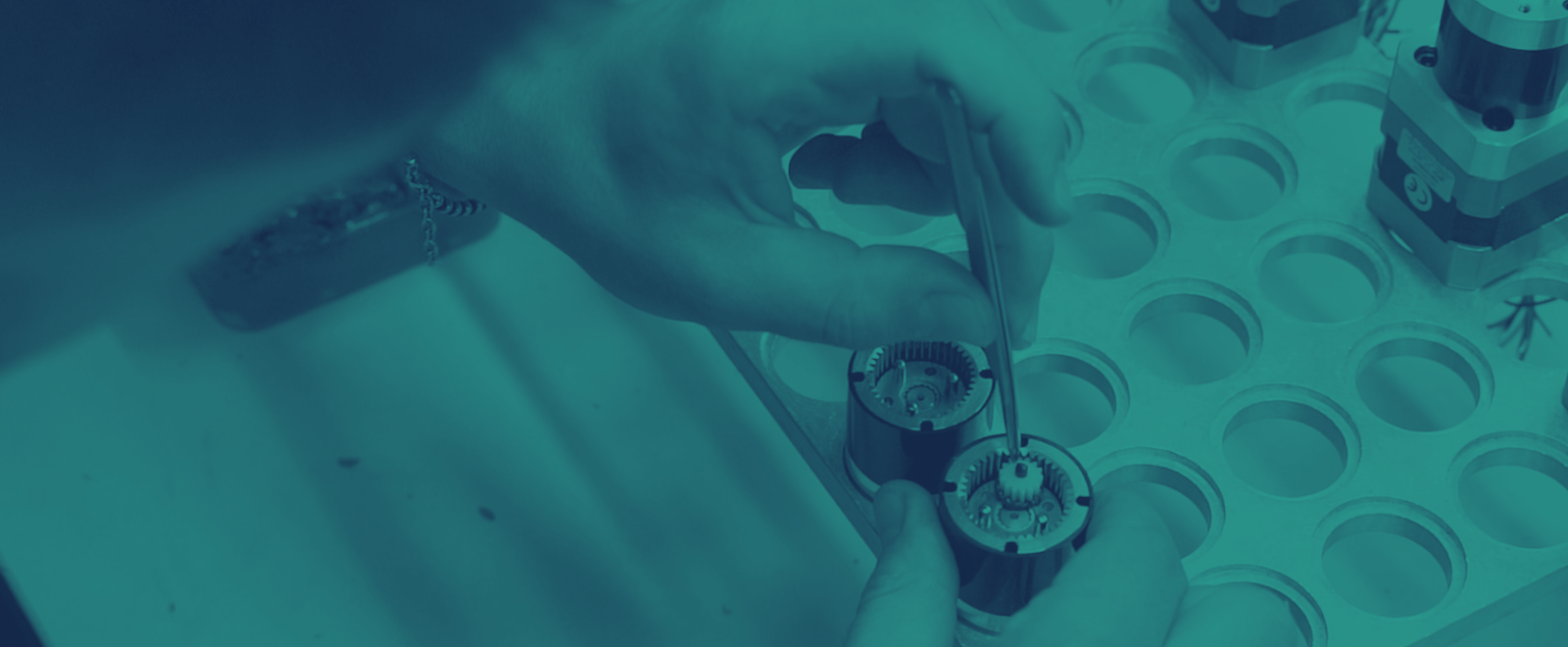
The first reduction stage incorporates polymer planetary gears, which significantly reduce operating noise, while the aluminium flanges and hardened steel gears provide the durability required for prolonged operation.
The NiCr steel output shaft, supported by dual ball bearings, ensures stability even under high loads, while the long-life permanent lubrication allows maintenance-free operation over a temperature range from −50 °C to +130 °C.
With operating speeds of up to 6,000 rpm and compatibility with DC, brushless and stepper motors, the R35 offers a transmission solution that combines precision, reliability and flexibility for a wide variety of applications.
Thanks to the expertise of our engineering department, every component—including flanges, shafts, ring gears, bearings and other elements—can be customized to ensure perfect integration with the customer’s application and performance requirements.
Like all our planetary gearboxes, the R35 can be integrated with virtually any electric motor supplied by the customer, enabling the development of fully customized drive systems. This results in high-performance transmission solutions that are easier to integrate into existing equipment, particularly in demanding sectors such as agriculture, where reliability and operational continuity are essential.