
Why Choose Small Modules for Quieter Gears?

It is commonly believed that a quiet mechanism is synonymous with high quality. Although it is natural to associate excessive noise with defective or poorly manufactured gears, this assumption is only partially correct. In reality, gear noise is influenced by many different factors. Some time ago, I grouped the main causes of noise in gear […]
Is It Possible to Manufacture Gears Without a Gear Measuring Center?
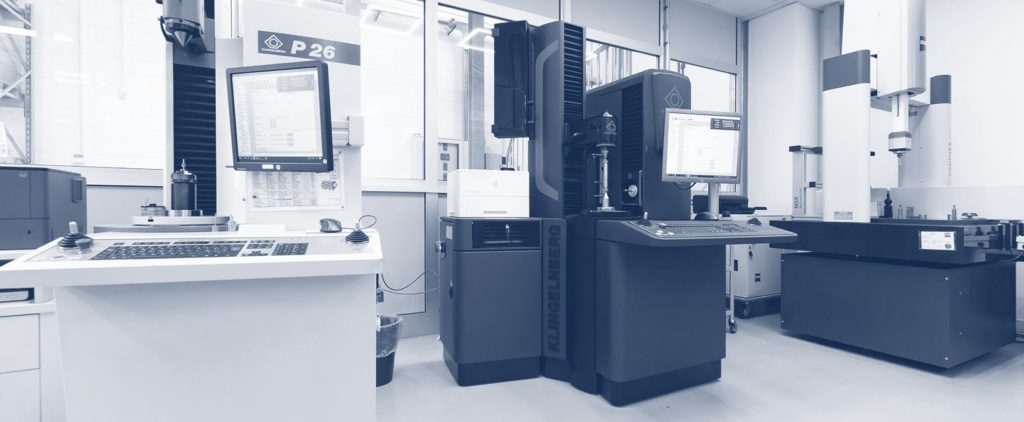
We expanded our metrology laboratory in 2009 with a Klingelnberg P26 four-axis CNC gear measuring cen When ter, many considered it a rather bold investment. Today, MICROingranaggi operates two gear measuring centers—the second one was installed ten years after the first—and although I was already convinced of the decision back then, with hindsight I consider […]
Even in Small Gearboxes, the Housing Is Critical

When discussing small precision gearboxes, such as those manufactured by MICROingranaggi, the focus naturally tends to fall on the gears themselves—how they are designed, how they mesh, the materials they are made from, and so on. However, housing design and lubrication management are just as critical to achieving high performance and long service life. In […]
There Is a Big Difference Between Measuring a Gear and Certifying It

Having worked with gears for many years, I have noticed that, in our industry, two concepts are often confused. At first glance they may seem similar, but in reality they serve very different purposes. I am referring to the fundamental difference between measuring a gear and certifying it. These are indeed two sides of the […]
An ideal solution for the agricultural sector

There is one thing that olive harvesters and electric pruning shears have in common: they operate in environments that place mechanical components under constant stress, exposing them to dust, mud and debris. These contaminants can infiltrate the transmission system, impairing its operation and generating unwanted vibrations. Among the many industries we serve, agriculture presents some […]
What Is the Right Balance Between Cost and Quality Control?

Whenever MICROingranaggi ships a product, the responsibility is ours. Always. If a component is non-conforming and causes a problem, that problem starts here. This applies to us just as it does to any other manufacturer, and it is precisely why quality control cannot be regarded as something performed merely because the customer requires it, nor […]
Why warehouse organization is an integral part of process control.

As we discussed last week, quality control is almost always perceived as a cost—one of those “necessary evils” that every manufacturer must accept. In reality, however, quality control should begin long before the actual machining process: with supplier selection, incoming material inspection, storage conditions, and even the management of cutting tools. Within this framework, an […]
Measuring Gear Chordal Thickness with a Span Micrometer: Best Practices

In the gear industry, there is a long-established manual inspection method that remains widely used both on the shop floor and in quality control because it is fast and requires no complex equipment. It is the gear chordal thickness measurement using a span micrometer, also known as the Wildhaber measurement. However, the fact that this […]
Prototype Compliance Does Not Necessarily Guarantee Process Capability

In our industry, the most critical phase is often considered complete once the first manufactured part complies with the drawing. While understandable, this assumption can be misleading. A prototype may meet every dimensional requirement, pass the initial inspections, and even be produced on the same machine, using the same CNC program, cutting tools, and machining […]
Perfect Gears Alone Are Not Always Enough

Imagine a micro gearbox mounted on a high-speed motor. Under light load, it may operate perfectly smoothly. As torque increases, however, the shaft deflects slightly. The deformation is minimal, yet sufficient to make the gear teeth contact only part of their working surface, with consequences that directly affect the performance of the entire system. This […]
The Impact of Geometric Errors in Micro Gears

When discussing gear manufacturing errors, the first aspects that usually come to mind are dimensions—diameter, module and dimensional tolerances. These are generally where attention is focused. However, when dealing with small or miniature gears, this perspective is only part of the picture. Based on our experience, the most critical errors are rarely dimensional; they are […]